Choosing your dog · UK guidance · checked 9 October 2026
Choosing a first dog: what actually matters
Choose your first dog around the care you can reliably provide on an ordinary day: exercise, company, training, coat care, space and money. A breed name can help you ask better questions, but it cannot tell you whether a particular dog will fit. Meet the individual, investigate their needs, and keep both adoption and responsible buying open.
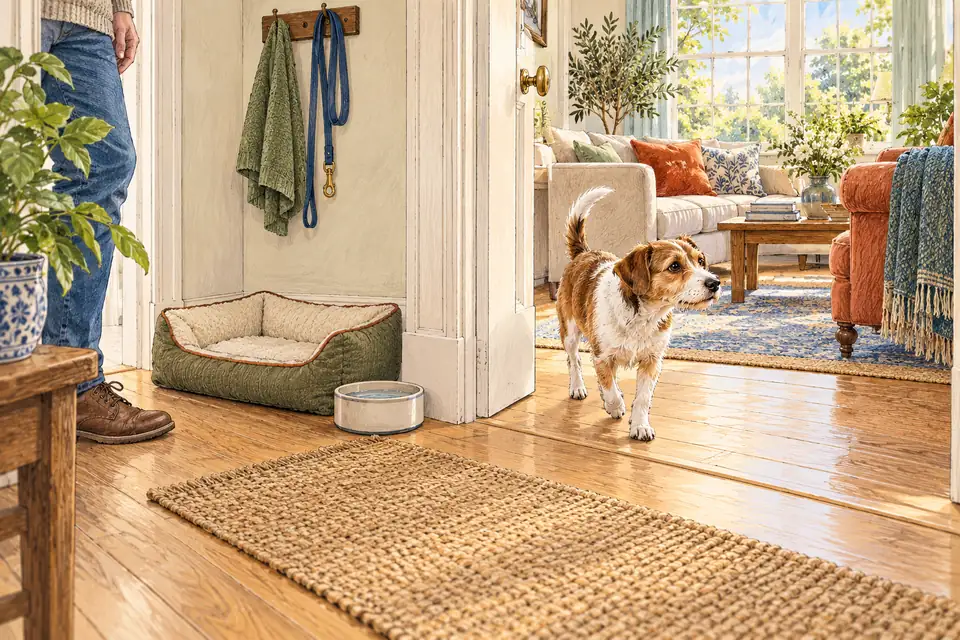
Start with a normal Tuesday
Dogs Trust’s readiness guidance asks prospective owners to consider their time, home, finances and capacity for a long-term commitment. Our editorial starting point is to write down the day you can actually offer, including the commute and the evenings when you are tired.
- Activity: when can you walk, train and provide enrichment? Compare that plan with the care guidance, then ask about the dog’s age, health and current routine.
- Company: who is there during the day, and who covers absences? Dogs Trust advises planning care around what the individual can cope with.
- Coat care: decide how much brushing you can do and whether you can fund professional help. The Royal Kennel Club explains that care varies with coat type; longer coats can need more attention to prevent knots.
- Size and home: consider usable floor space, outdoor access and how you will transport the dog. A flat needs its own practical plan; work through it here.
Puppy or adult is a separate decision
Dogs Trust’s workday guidance emphasises the time puppies need for supervised toilet training, social development and basic training. Our editorial judgement: if that early care cannot fit your schedule, discuss individual adult dogs with a rescue rather than assuming a supposedly easy puppy breed will solve it. An adult is not a guarantee of less work: ask what is known, what is uncertain and what support is available.
Plan the whole cost, not just bringing the dog home
Make your own budget for food, routine veterinary care, insurance or emergency funding, equipment, grooming, training and holiday or daytime care. Use current quotes and check exclusions. Our budget tool works with your estimates; the cost guide explains the limits of PDSA’s dated minimum figures.
Meet a dog with questions, not a promise
Ask a rescue about the dog’s observed routine, settling-in needs and support. If buying, investigate the breeder, rearing environment, parents and documented health screening using ourmeeting checklist. The acquisition route and the dog’s age are different choices; neither a pedigree nor a crossbreed label settles suitability.
These are individual questions, not breed ratings: What happens when this dog is left? How do they respond to handling? What exercise are they used to? What is known about living with children or other animals? Read children and dogs andbehaviour and your life before treating a shortlist as a decision.
Questions first-time owners often ask
Is there one best breed for a first-time owner?
We do not rank breeds by that label. Start with your care capacity, then investigate the individual dog and the support you need.
Can a small dog fit a busy schedule more easily?
Small size does not answer the company, training or activity questions. Make the care plan before choosing by appearance.
What if my plan has a gap?
Resolve it with dependable care and a backup, or postpone the commitment. A good-looking match result does not replace that practical decision.
Sources and limits
- Dogs Trust: are you ready for a dog? — UK charity planning guidance.
- Dogs Trust: choosing your dog — UK adoption and buying guidance.
- Dogs Trust: working full-time — company, puppy care and daytime support.
- Royal Kennel Club: dog care basics — UK coat-care guidance.
Sources checked 9 October 2026. Planning prompts and conclusions are ChooseMyDoggy’s editorial judgement, not a study of first-time-owner outcomes. No compatibility or health guarantee.